An Honest Look at Whether F-Wave Is the Right Call for Black Hills Homeowners
Let's be honest. Most people don't think about their roof until it's too late, until a hailstorm rolls through the Black Hills, the adjuster shows up, and suddenly you're staring down a five-figure repair bill and a sky-high deductible. It happens here. A lot. Rapid City averages five to six hailstorms per year, and traditional asphalt shingles were simply never designed to handle that kind of repeated punishment.
That's why we want to talk about F-Wave REVIA synthetic shingles, a product that genuinely changes the conversation about what a roof can do. If you're replacing your roof and you want it to be the last time you ever have to, F-Wave is the product you should know about.
What Is F-Wave Roofing?
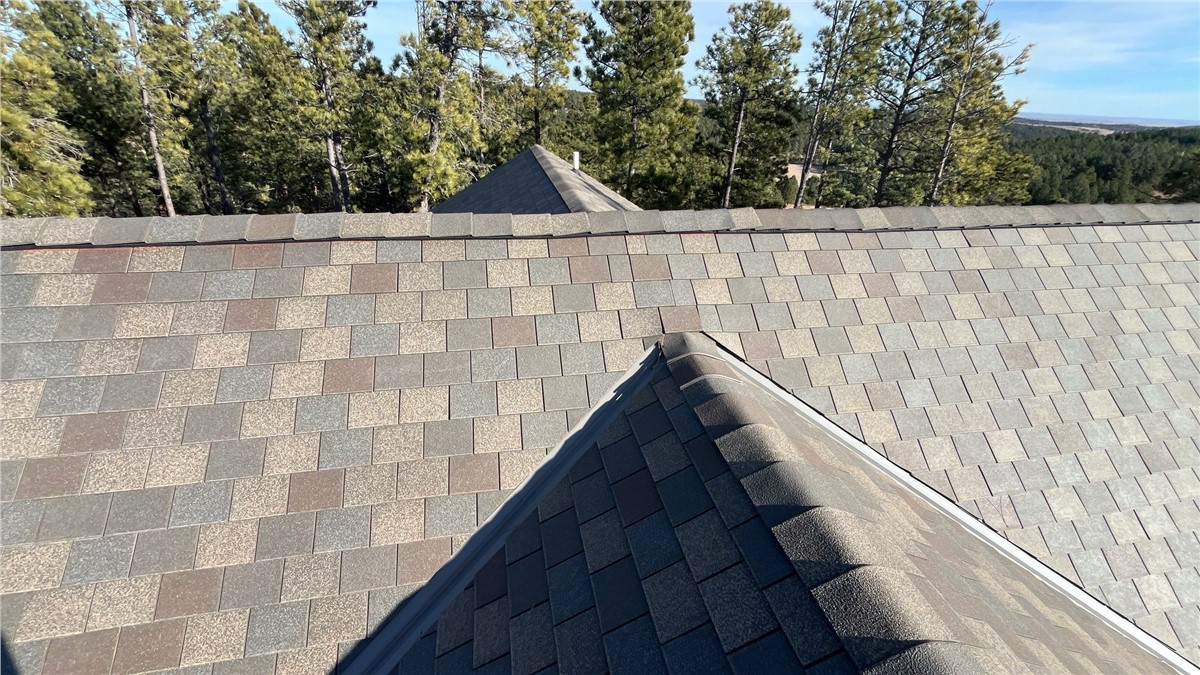
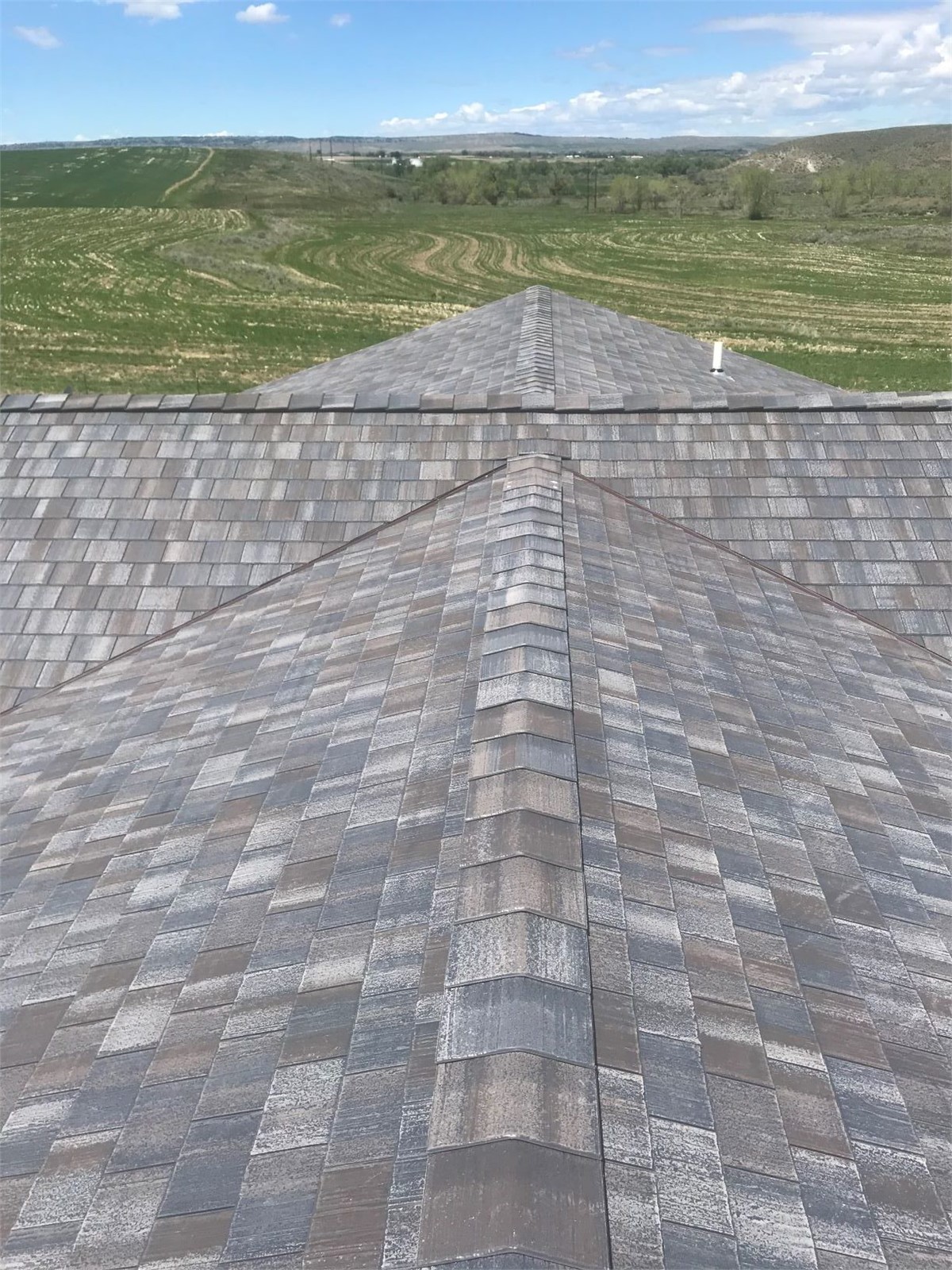
F-Wave is a premium synthetic roofing shingle made from a proprietary blend of commercial-grade polymers, specifically thermoplastic polyolefin (TPO). Unlike traditional asphalt shingles, which rely on granules embedded in a fiberglass mat, F-Wave is engineered as a single-piece, granule-free construction. That single difference is enormous.
With asphalt shingles, the granules are the first line of defense. When hail, foot traffic, or UV rays wear those granules away, the shingle begins to degrade. Once the granules go, the clock is ticking on the rest of the roof. F-Wave eliminates that failure point entirely. There are no granules to lose because the protection is built into the material itself, all the way through.
The result is a shingle that is 2.5 times stronger than leading asphalt shingles, far more resistant to impact and UV degradation, and engineered to perform at the highest level for decades, not just a few good years before the first big storm.
The XTM Interlocking System: Engineering That Actually Matters
F-Wave's newest innovation is the XTM interlocking shingle system, and it's a genuine game-changer for homes in high-wind, high-hail climates like ours.
Here's the problem with conventional shingles: they overlap and rely on nails and adhesive sealant strips to stay put. Under extreme conditions, think 90+ mph straight-line winds or sustained storm pressure, that's not always enough. Edges can lift, corners can curl, and once a shingle starts to peel, the damage cascades fast.
The XTM system solves this with a mechanical interlock between every single shingle. Each piece physically locks into the ones beside it and below it, creating a unified surface rather than a collection of individual pieces sitting on top of each other. The shingles don't just rely on adhesive and fasteners, they grip each other.
The practical impact of this: F-Wave XTM shingles are rated and warranted for winds up to 130 mph. For context, that's the threshold of a Category 4 hurricane. We don't get hurricanes in South Dakota, but we do get severe straight-line winds, micro-bursts, and derecho-level storm systems that have no business finding a weak point in your roof. The XTM system ensures they won't.
Class 4 Hail Resistance — With a Warranty to Back It Up
F-Wave REVIA shingles carry a Class 4 impact resistance rating under UL 2218 — the highest classification available. That means they've been tested by independent labs using a two-inch steel ball dropped repeatedly from 20 feet, and they showed no cracking, splitting, or fracture.
But here's what separates F-Wave from the pack: they don't just earn the rating and walk away. F-Wave backs their product with a 5-year hail warranty with warranted coverage specifically protecting against hail damage. That is an industry-first. Most roofing manufacturers, including virtually every asphalt shingle brand, will not warranty their product against hail damage. The Class 4 rating gets you insurance discounts, but if a storm actually damages the shingles, you're on your own.
With F-Wave, that's not the deal. The hail warranty means that if hail causes damage during that coverage period, the product replacement is covered. When you pair that with a 50-year WeatherForce limited warranty on materials and labor, you have coverage that actually means something, not fine-print protection designed to expire before a claim ever gets filed.
Class A Fire Rating: The Protection Most People Don't Think About
Hail gets all the attention in Rapid City, and for good reason. But fire is a risk that homeowners across the Black Hills increasingly can't ignore. Wildfire conditions in western South Dakota, combined with structure fires that can spread from a neighbor's property or a downed power line, make fire resistance a serious consideration when choosing a roof.
F-Wave REVIA shingles carry a Class A fire rating, the highest classification available in the roofing industry. Class A means the shingles will not ignite when exposed to direct flame, will not spread fire along the surface, and will not contribute to fire propagation across the roof.
This is not a minor detail. Not every premium synthetic or impact-resistant roofing product on the market achieves Class A fire certification. Some products excel at hail and impact resistance but fall short on fire protection — leaving homeowners with a roof that handles one threat while remaining vulnerable to another. With F-Wave, you don't have to make that trade-off. Class 4 impact resistance and Class A fire protection in the same shingle. That combination is genuinely hard to beat.
From an insurance standpoint, a Class A fire rating can also contribute to premium reductions on your homeowner's policy, on top of the discounts many carriers already offer for Class 4 impact ratings. It's the kind of double benefit that makes the upgrade math look a lot more favorable over time.
The Real Cost Comparison: F-Wave vs. Asphalt Over Time
F-Wave is a premium product, and the upfront cost reflects that. You're looking at roughly 2 to 3 times the cost per square compared to standard asphalt shingles. We're not going to pretend otherwise. But the question isn't what you pay today, it's what you pay over the life of the roof.
The Asphalt Math
A standard asphalt shingle roof in South Dakota's climate typically lasts 15 to 25 years under normal conditions. One major hailstorm can functionally age that roof by a decade. Homeowners in hail-heavy areas like Rapid City frequently see their roofs replaced every 7 to 10 years, sometimes more often. Factor in the deductibles, the time lost dealing with insurance claims, the disruption of a full replacement, and the ongoing insurance premium at standard rates, and that "affordable" asphalt roof gets expensive fast.
The F-Wave Math
F-Wave is engineered for a 50+ year lifespan. In that same window where you might replace an asphalt roof three or four times, F-Wave sits on your house and keeps performing. The hail warranty means hail-related damage is covered rather than coming out of your pocket or triggering a claim and deductible. The Class 4 rating typically unlocks insurance premium discounts of 20 to 30 percent annually with many carriers, and those savings compound year over year.
Do the math on 25 years of premium discounts against the upfront cost difference and the avoided replacement cycles. For most homeowners in the Black Hills, F-Wave pays for itself, and then some.
Why Built Right Roofing for Your F-Wave Installation
F-Wave is a premium product, and it requires a contractor who knows how to install it correctly. The XTM interlocking system in particular has specific installation requirements, cut corners on the process and you undermine the very engineering that makes the system perform.
Built Right Roofing & Construction brings the credentials and track record to get it right:
Experience — We have installed many F-Wave roofs throughout Rapid City, Spearfish, Gillette, and Sturgis.
A+ BBB Rating — Our reputation is built on doing right by customers, every time.
Top 500 Remodeler Nationally — Recognized among the best remodeling contractors in the country.
We also give back to the community we work in. Each month, Built Right highlights and supports a local Black Hills charity — because we're not just here to put roofs on houses. We're here to be a real part of this community.
So — Is F-Wave Roofing in Rapid City Worth It?
Yes. For most Black Hills homeowners, F-Wave is absolutely worth it, and here's the straight answer:
If you plan to stay in your home for more than 10 years, F-Wave is worth it. The upfront premium over asphalt pays itself back through avoided replacements, lower insurance premiums, and zero hail deductibles during the warranty period. The math works.
If you've filed more than one hail claim in the last decade, F-Wave is worth it. You already know what the cycle costs. A roof that stops that cycle cold is not an expense, it's an investment with a measurable return.
If you live in a wildfire-adjacent area or a neighborhood where fire risk is a real concern, F-Wave is worth it. The Class A fire rating combined with Class 4 impact resistance gives you a level of dual protection that very few roofing products on the market can match.
The only homeowner for whom F-Wave might not be the right call today is someone planning to sell within the next two to three years who doesn't have hail insurance concerns and is purely optimizing for minimum upfront spend.
For everyone else? F-Wave is the last roof you'll need.
Ready to Get a Free Estimate?
Tags
Subscribe to Built Right Roofing & Construction's Blog


Comments